| Main Page - Back |
|
From SudokuWiki.org, the puzzle solver's site |

The Killer Cage Convention
In Killer Sudoku clues are placed inside 'cages' - which ring a certain number of cells. The clue number is the sum of the solutions to those cells. It is theoretically possible for a cage to contain two of the same numbers if the cage forms an 'L' shape or 'dog-leg' over two boxes. Examples are to the right in bold red and green.
From the earliest days of Killer Sudoku there has been a convention that no cage should contain duplicate numbers - which applies to these special types of cage. If a cage could contain duplicate numbers then it would greatly increase the number of combinations of solutions.
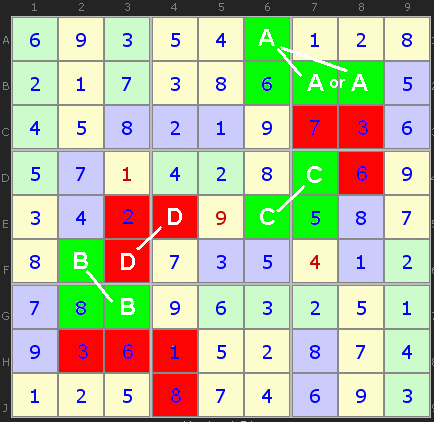
There are six 'dog-legs' in this example, some have A-A, B-B etc showing where possible duplicate numbers could go - but do not.
All the puzzles on this site and ones I publish conform to this convention, but you might find other publishers ignore this constraint. If you enter such a puzzle into the Killer Solver it will not work.
The convention does not apply to KenKen or Kendoku as designed by the people at www.kenken.com.